

April 21, 2021
.png)

Signing our values by translating our whakatauākī
We talk a lot about making learning accessible for everyone, regardless of role, background, or communication style. We pride ourselves on meet people where they are.

Because our whakatauākī guides everything we do at Education Unlimited, then it should be accessible to everyone in our community, including people who communicate in NZSL, (New Zealand Sign Language).
So, we committed to learning it ourselves. Properly.
The whakatauākī
Our whakatauākī was created by Tom Taiaroa, partner of our co-director Maureen. He sat with Tina, EU Managing Director as we worked through what we were trying to say, then fine-tuned and finessed our thinking into something that captured our values perfectly.
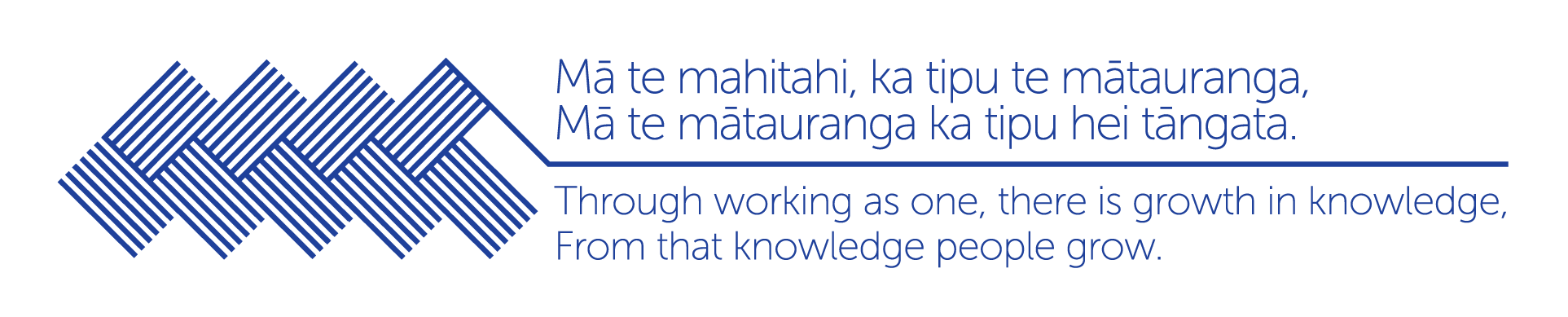
Mā te mahitahi, ka tipu te mātauranga,
Mā te mātauranga ka tipu hei tāngata.
Through working as one, there is growth in knowledge,
From that knowledge people grow.
Three concepts anchor it: tipu (knowledge), hei tāngata (people, not just individuals), and mahitahi (partnership). It's not a whakataukī (a well-known proverb passed down through generations where the author is unknown), it's a whakatauākī, meaning we know its author and origins: It's alive, contemporary and a principle we actively live by, not just words on our website.
This made translating it into NZSL both essential and complex.
The translation challenge: It's not about words
It would be easy to assume translation means finding equivalent words in another language: a simple word-swap. It’s not that simple.
Real translation, especially between te reo Māori and NZSL, isn't about finding equivalent words. Instead, it’s about preserving meaning, intent, and connection across fundamentally different ways of communicating.
Challenge one: What does ‘whakatauākī’ mean in sign?
Our first hurdle was understanding how to sign ‘whakatauākī’.We were given three different options. Each carried slightly different cultural weight and meaning. One emphasised the historical aspect (like whakatauākī). Another focused on guidance or direction. The third highlighted personal authorship.
None of them were wrong. But only one truly captured whakatauākī as a living principle created by a known author that guides present-day action, not an ancient proverb.
Thomas made the final call on which sign most accurately reflected the intent because he understood the nuance we were trying to preserve.
Challenge two: Signing the whakatauākī itself
Then came the bigger challenge, translating the full whakatauākī in a way that preserved its layered meaning.
"Mā te mahitahi, ka tipu te mātauranga" isn't just "through partnership, knowledge grows." There's a specific cultural understanding embedded in mahitahi (working as one, true collaboration, not just cooperation). There's intention in tipu (growth that's ongoing, organic, not static acquisition).
In English, we can explain those nuances with additional words. In sign language, you must convey them through movement, expression, and the relationship between signs.
When people sign, there are no words or subtitles. You just have movement and meaning without explanatory text to clarify. The signing itself must carry the full weight of intent and connection.
Behind the scenes was a big learning curve
We've been incredibly lucky to work with June, one of our team members. Three of her four children are Deaf, and she's fluent in NZSL.
June connected us with Rachel, an NZSL expert who understood the complexity of translating te reo Māori concepts into sign. Rachel created the initial video of our whakatauākī in NZSL in two distinct parts, each carefully considered.
But it wasn’t to have a video to share; we wanted it so we could learn it ourselves.
We committed to weekly practice
Members of our team have met online regularly with June and her daughter Caitlin.
Rachel's video would play. June would translate and demonstrate for us, breaking down each sign, explaining the movement and meaning. We'd watch carefully. Then we'd try to follow along.
And then Caitlin, in her patient, encouraging way, would gently correct us:
"Your hand is in the wrong position. See? That changes what you're saying."
"You need to hold that sign longer. The timing matters."
"Not quite. Try again."
We'd practise. Make mistakes. Try again. And again.
Learning is a habit we must all nurture
We spend our days helping other people learn. We're used to being the learning designers, teachers, the facilitators and the experts. This flipped the script entirely!
Suddenly, we were the ones struggling to remember sequences. The ones getting gently corrected. The ones who couldn't quite get our hands to do what our brains wanted them to do. It was humbling.
The experience was also a gift. Because it reminded us viscerally, not theoretically, what it feels like to be a learner. You need patience, repetition without judgment, and teachers who believe you'll get there, even when you're struggling.
That's the environment we want to create for every person who learns with us. And experiencing it ourselves has made us better at building it for others.
What we learned about translation
1. Translation is about intent, not words
You can't just swap words from one language to another and preserve meaning. You have to understand the intent behind what you're saying and find ways to express that intent in a completely different linguistic and cultural framework.
That requires deep understanding of both languages. It requires consultation with native speakers and cultural experts. It requires humility about what you don't know.
2. Context disappears without words
In written or spoken language, you can add clarifying phrases, explanatory footnotes, cultural context. In sign language, especially when recorded as a standalone video, all of that must be embedded in the signing itself.
Which means every hand position, every facial expression, every pause carries meaning. There's no room for sloppiness or "close enough."
3. Language is embodied
Signing isn't just communication, it's a physical, embodied practice. You're using your whole body to convey meaning: hands, face, posture, movement through space.
You can't phone it in. You must be fully present, fully engaged. There is both intimacy and immediacy in it that written or spoken language doesn't always demand.
That cemented something important: communication isn't only about the message. It's also about the presence and attention you bring to the exchange.
What we learned about accessibility
It takes real work
Accessibility isn't about good intentions or symbolic gestures or acknowledging the importance of NZ sign language one week a year. It's about putting in the hours. It means consulting with experts, centring the people you’re trying to reach and accepting correction. It’s not performative inclusion, its authentic.
We are so grateful to be:
· working directly with June and Caitlin, not just commissioning content
· learning to sign it ourselves, not just displaying someone else's work
· taking the time to get it right, not rushing to meet an arbitrary deadline
· willing to be corrected, repeatedly, without defensiveness.
It requires collaboration
We couldn't have done this alone. We needed June's expertise and her willingness to teach us. We needed Caitlin's patience and precision. We needed Rachel's deep understanding of both te reo Māori and NZSL. We needed Thomas’ cultural knowledge to guide decisions about meaning and intent.
And of course, accessibility isn't a solo project. It's inherently collaborative: mahitahi in action.
It's never ‘done’
Even now, after weeks of practice, we're still learning, refining and discovering new layers of meaning.
In fact, this is an evolving story, not a finished product: it’s progress over perfection!
What we learned about ourselves
We're all learners
No matter how experienced we are in our field, there's always more to learn. But that's not a failing, it’s an opportunity. It’s also the mindset we want to bring to our mahi: curiosity, humility, willingness to be beginners again.
Experience enriches empathy
You can intellectually understand what learners need. But theory is easily trumped by your own experience of frustration in not getting it right, gratitude for helpful feedback and satisfaction of improvement.
We're better trainers, better facilitators, better partners because we've been on the receiving end this time.
Our values aren't just words
Mā te mahitahi, ka tipu te mātauranga.
Through working as one, there is growth in knowledge.
We didn't just translate those words into NZSL. We live them. We are growing our knowledge through partnership with June, Caitlin, and Rachel.
Where we are now
We can now sign our whakatauākī in NZSL. Not perfectly, but with intent and respect for both languages and the people who speak to them.
We've deepened our commitment to accessibility. Not as a compliance issue or a marketing angle, but as a core part of who we are and how we operate.
And we've been reminded what it means to be learners.
Interested in accessible, tailored workplace training that meets people where they are? Let's talk.

